If you’ve spent any time in Johnston County over the past several months, you’ve probably heard conversations about the proposed Unified Development Ordinance, commonly referred to as the UDO.
Developers are discussing it.
Farmers are discussing it.
Landowners are discussing it.
Local governments are discussing it.
The question we hear most often is simple:
“What exactly is a UDO, and why does it matter?”
The answer is straightforward.
A UDO is the rulebook that determines how land can be developed and used within a community. It establishes the standards for everything from subdivisions and commercial centers to setbacks, buffers, landscaping requirements, parking, density, signage, and permitted land uses.
In short, the UDO helps answer the question:
What can be built, where can it be built, and under what conditions?
For property owners, investors, developers, and businesses, those answers can have a significant impact on property values and development potential.
Why Is Johnston County Revising Its UDO?
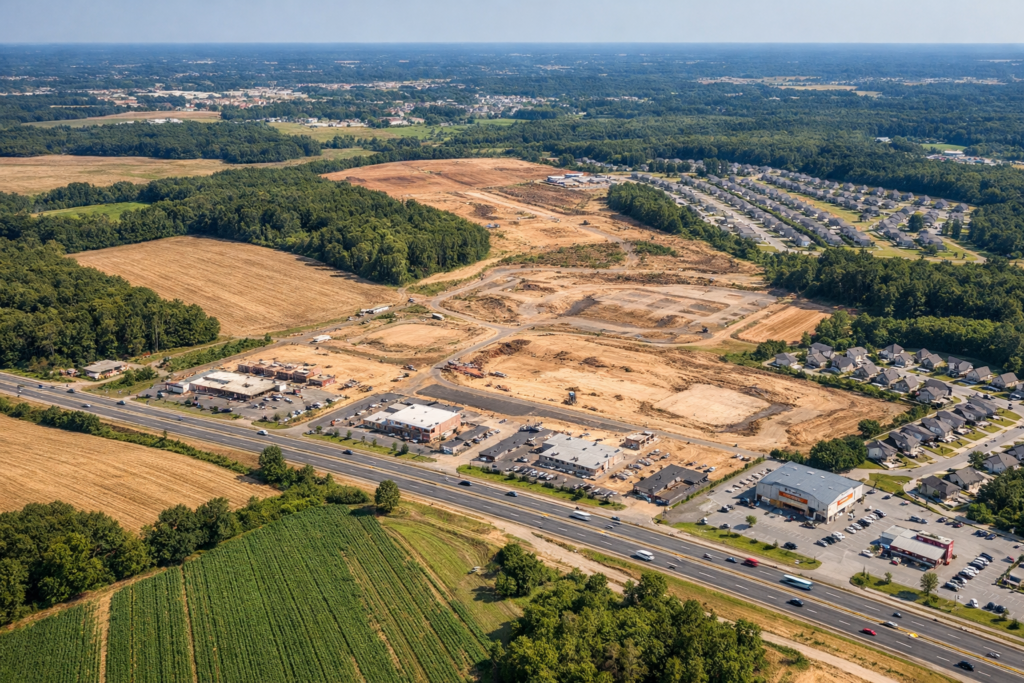
Johnston County is one of the fastest-growing counties in North Carolina.
The county adopted the Envision Johnston 2040 Comprehensive Plan to establish a long-term vision for growth, infrastructure, agriculture, economic development, and community character.
The UDO is the tool used to implement that vision.
Think of the Comprehensive Plan as the roadmap and the UDO as the rules of the road.
As communities grow, ordinances must evolve alongside them.
Questions that local leaders are trying to answer include:
- How do we preserve agriculture while accommodating growth?
- How do we protect rural character while creating housing opportunities?
- Where should future commercial and industrial development occur?
- How should utilities and infrastructure investments influence growth patterns?
- How do we create jobs while maintaining quality of life?
These are not easy questions, and reasonable people can disagree with the answers.
Why Are People Concerned?
Change naturally creates uncertainty.
Some landowners worry that proposed regulations could limit future development options or reduce the number of homes that can be built on a property.
Farmers want to ensure agricultural operations remain protected.
Developers are evaluating how buffers, setbacks, and design requirements could impact project feasibility and housing affordability.
Residents want to understand how future growth may affect traffic, schools, infrastructure, and community character.
All of these concerns are valid and deserve thoughtful discussion.
One important thing to note: The adoption of a new UDO does not automatically rezone your property.
In most cases, the ordinance updates the standards and rules governing future development rather than changing existing zoning classifications.
Understanding the difference between zoning, future land use plans, and development standards is critical determining the value of property.
Why This Matters to Landowners
Two properties that appear very similar on paper can have dramatically different values based on factors such as:
- Available utilities
- Future land use designation
- Development standards
- Access to infrastructure
- Permitted uses
- Density allowances
As local governments across North Carolina update their ordinances and comprehensive plans, these factors are becoming increasingly important in determining land values.
In today’s market, understanding land means understanding policy, infrastructure, and growth strategy.
This Is Bigger Than Johnston County
While Johnston County may currently be receiving much of the attention, it is not alone.
Communities throughout the Triangle and across North Carolina are revisiting their UDOs, comprehensive plans, utility strategies, and infrastructure investments as they prepare for future growth.
The conversations happening in Johnston County today are similar to conversations taking place in counties and municipalities throughout the region.