 Why Water, Sewer, and Infrastructure Capacity Are Becoming One of the Triangle’s Biggest Development Challenges
The Triangle remains one of North Carolina’s fastest-growing regions, with new residential, commercial, and industrial development reshaping communities across Wake, Johnston, Harnett, Franklin, Chatham, and surrounding counties.
While location, zoning, and road frontage are critical factors, every successful development also depends on infrastructure. Water, sewer, roads, stormwater systems, and utility networks must have sufficient capacity to support new growth while continuing to serve existing residents and businesses. As development accelerates, ensuring that capacity has become one of the biggest challenges facing local governments.
Capacity Is the Hidden Piece Most People Never See
One of the most common questions asked about a piece of raw land is whether public water and sewer are available.
A more important question is often:
Does the system have enough capacity?
Having a water or sewer line near a property doesn’t automatically mean new development can be served immediately. Treatment plants, pump stations, and transmission systems all have operating limits. With the rapid growth the Triangle has experienced over the past two decades, many water and sewer treatment systems throughout the region are approaching the limits of their designed capacity. As those systems begin approaching capacity, communities must invest in creating more capacity, or new systems altogether, before additional growth can occur.
Those projects take years to plan, design, permit, and construct.
Franklin County: Planning for Tomorrow’s Growth
Franklin County provides an excellent example of why utility capacity has become such an important topic.
County leaders have projected significant population growth over the coming decades and recognize that future water demand will increase dramatically. To help manage limited capacity, Franklin County adopted a Water and Sewer Allocation Ordinance while continuing to pursue long-term solutions for expanding its water supply.
As outlined in a recent letter from County Manager Ryan Preble, the county continues to explore several regional water supply options, including potential access to Kerr Lake. While no final solution has been secured, the discussion highlights the growing challenge many fast-growing communities face: planning for tomorrow’s development while working within today’s infrastructure limitations.
It’s a reminder that managing growth isn’t simply about approving new development. It’s about ensuring the infrastructure exists to support it.
Why This Matters for Property Owners?
Infrastructure planning has a direct impact on commercial real estate.
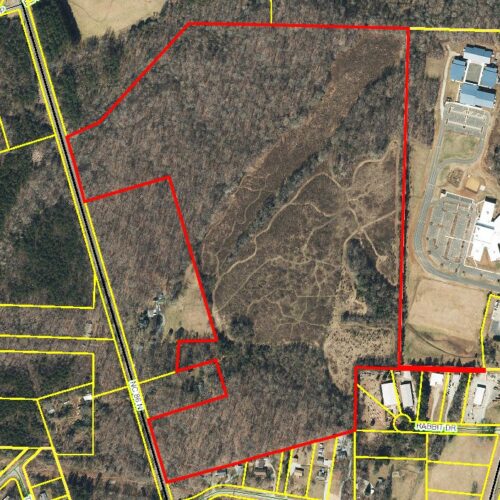
When developers evaluate a parcel of land, they consider much more than acreage and zoning. They also need to understand utility availability, system capacity, required infrastructure improvements, and the costs associated with serving a site.
It’s ultimately the developer’s responsibility to identify a viable utility solution for a project. That may involve extending water or sewer lines, constructing new infrastructure, or funding other improvements necessary to serve the site.
Those costs become part of the project’s overall development budget and often have a direct impact on what a developer can afford to pay for the land. In other words, the more expensive the utility solution, the less a developer may be able to pay for the property.
That’s one reason two properties with similar size, location, and zoning can have significantly different market values. A site with readily available utility capacity may be far more attractive than one requiring costly infrastructure improvements.
A Regional Conversation
Franklin County isn’t alone.
Across the Triangle, communities are investing in water, wastewater, and other infrastructure improvements to support continued growth. Some are expanding treatment facilities, others are extending or replacing utility systems, and many are working with neighboring communities to develop long-term regional solutions.
Although each community’s approach is different, they all share the same goal: ensuring that infrastructure keeps pace with growth.
As these investments continue, utility capacity will remain one of the most important, and often least understood, factors influencing where development occurs.
The Bottom Line
The next time you hear about a new water treatment plant, sewer expansion, or infrastructure improvement, remember that these projects are about far more than pipes and pump stations.
They influence where new neighborhoods are built, where businesses choose to invest, and how communities prepare for future growth. Understanding utility capacity helps explain why some properties are ready for development today while others may require more creative and often costly solutions before they can reach their full potential.
At White Oak Commercial, we help property owners, developers, and investors understand the factors that influence a property’s development potential, including utility availability, infrastructure capacity, and the long-term planning that shapes growth across the Triangle.